
California AI rules for lawyers in 2027 will introduce important requirements for attorneys using generative artificial intelligence in their legal work. Following the signing of Senate Bill 574 in September 2026, lawyers preparing court documents, reviewing research, and handling confidential information must pay closer attention to how AI tools are used.
For personal injury victims, these changes raise practical questions. Can a lawyer use artificial intelligence to draft a legal document? Who is responsible if an AI system invents a court decision? What happens when private medical records are uploaded to a technology platform?
The central principle remains straightforward: lawyers are responsible for their professional work even when technology assists them. AI may help organize information or prepare an initial draft, but it cannot replace legal judgment, accurate research, or appropriate confidentiality safeguards.
California’s new legislation addresses these concerns while allowing responsible technology use. Understanding the rules can help injured people ask better questions about how their cases are prepared and protected.
What California SB 574 Changes for Attorneys Using AI #
Senate Bill 574 addresses the use of generative artificial intelligence by California attorneys and arbitrators. Generative AI refers to technology capable of producing text, images, audio, or other content in response to instructions.
Legal professionals may use these systems for research assistance, document organization, drafting, or administrative work. However, generated material may contain inaccurate statements, outdated law, fabricated citations, or other errors.
In September 2026, California enacted legislation intended to strengthen accountability around these risks. The new requirements are scheduled to begin in 2027.
The law does not mean AI-assisted legal work is automatically improper. Instead, it emphasizes independent professional review, responsible disclosure, and protection of information entrusted to attorneys.
Lawyers remain responsible for AI-generated legal documents #

One significant concern involves legal documents containing information that was never verified. Generative AI systems sometimes produce convincing descriptions of cases or statutes that do not exist.
In a personal injury lawsuit, that type of mistake could affect a motion, legal argument, or court submission.
Attorneys have existing duties to provide accurate representations to the court. SB 574 reinforces that those responsibilities do not disappear when a software program helps create the document.
Lawyers must exercise their own judgment and take reasonable steps to ensure that AI-assisted material is accurate.
Why fabricated court citations create serious problems #
A legal citation directs the court to an authority supporting an argument. The authority might be a statute, judicial opinion, regulation, or other recognized source.
When an AI system invents a case name or misrepresents a court’s holding, the resulting document can mislead the court.
Inaccurate citations may result in additional proceedings, sanctions, professional consequences, or harm to the client’s case, depending on the circumstances.
Lawyers should verify cited authorities through reliable legal research sources rather than relying on an AI-generated summary.
For injury victims, the key question is not whether technology helped prepare a document. It is whether the attorney carefully reviewed the work before submitting it.
What disclosure of AI use may mean for court filings #
SB 574 establishes disclosure requirements concerning certain court-submitted material produced with generative AI.
These provisions are intended to improve transparency while preserving the attorney’s responsibility for the document’s accuracy.
However, disclosure does not mean that AI-assisted documents are automatically rejected or that every routine software function requires the same treatment.
The applicable statutory language, court rules, and facts of the particular filing determine the requirements.
Attorneys should distinguish generative content creation from ordinary technology features, such as standard formatting or document storage.
Courts may also maintain additional applicable local rules or standing orders addressing AI-assisted submissions.
How the law addresses confidential client information #
Personal injury cases frequently involve sensitive documents. Medical records, financial information, employment files, insurance details, and personal communications may become part of the legal investigation.
Attorneys must protect confidential information under applicable professional rules and legal obligations.
Sending sensitive records to an external AI platform without understanding how the information will be processed may raise confidentiality concerns.
SB 574 addresses the use of nonpublic or confidential information with generative AI systems.
Responsible evaluation of a tool may include its privacy protections, retention policies, access controls, and contractual safeguards.
Why injury-related medical records need extra protection #
Medical evidence can help establish a connection between an accident and the resulting injuries. Records may contain diagnoses, medications, treatment history, identifying information, and highly personal details.
These materials may be relevant to legal claims, but that does not make unrestricted disclosure appropriate.
Before using third-party technology, attorneys should determine whether the proposed handling of the information is consistent with professional confidentiality requirements.
Injured people may ask their legal representatives how documents are stored, who can access them, and what safeguards apply when outside technology providers are involved.
For related guidance, read our article on AI-generated evidence in personal injury claims. It explains why original photographs, metadata, and authentic records remain important.
How the New AI Rules Could Affect Personal Injury Claims #
California’s new requirements may influence how law offices prepare documents and review the information used in injury cases.
However, the law does not create a new automatic right to compensation or change the basic elements of a negligence claim.
An injured person generally still needs evidence establishing the applicable legal requirements for liability and damages.
AI technology may help manage large collections of documents, but responsibility for legal decisions remains with qualified professionals.
Insurance claim handling, settlement negotiations, and court litigation may each involve different uses of technology.
Understanding these distinctions can help clients evaluate the questions that matter most.
How AI can assist without replacing legal judgment #
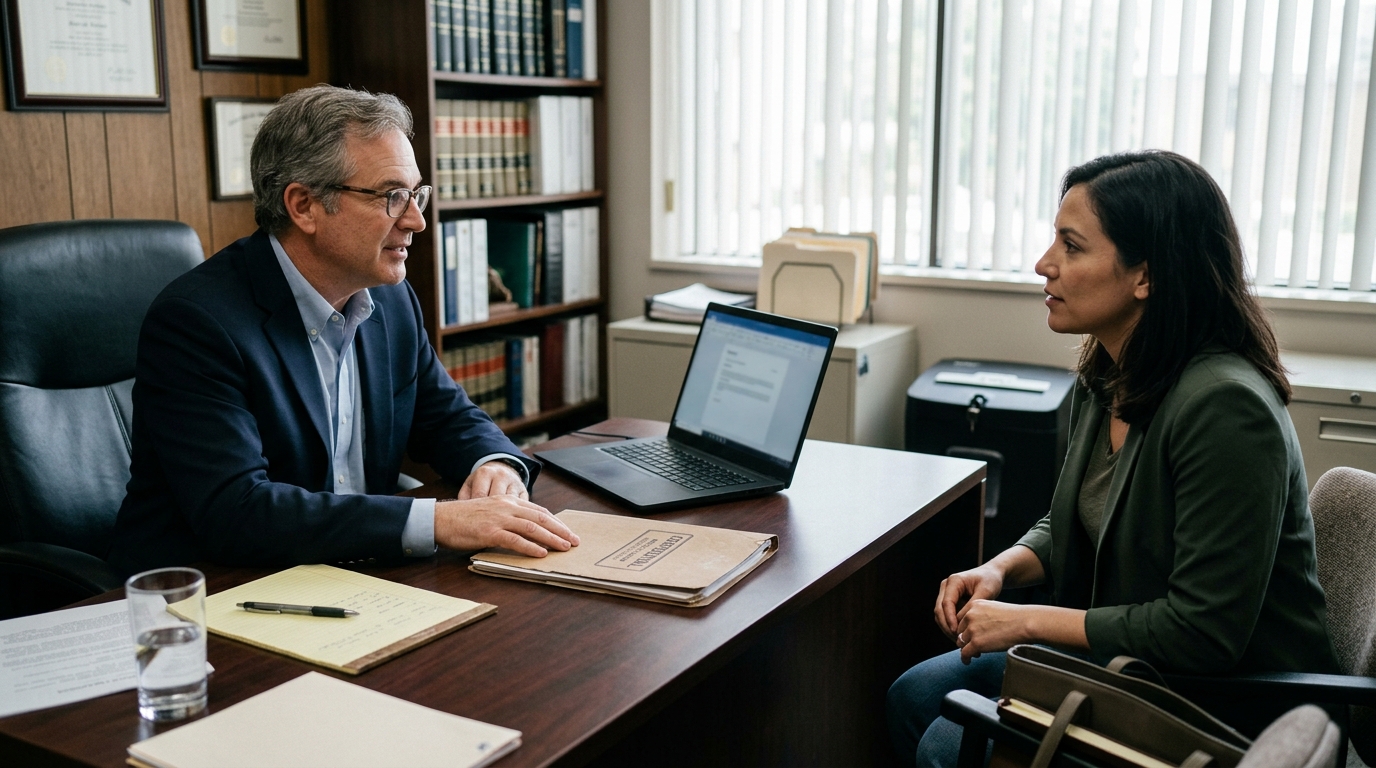
In an injury case, a law office may need to review accident reports, medical bills, employment records, witness statements, and correspondence with insurers.
Technology can help sort documents, locate information, and prepare preliminary summaries.
For example, software might identify references to medical appointments across hundreds of pages. A human reviewer should still confirm the dates and context using the underlying records.
AI systems may also help generate draft correspondence or organize potential legal issues for additional research.
These uses can offer efficiencies, but they require appropriate supervision and verification.
Attorneys must decide which evidence is relevant, what arguments are legally supported, and whether the client’s interests are being protected.
Our guide to medical lien delays in injury settlements highlights one area where careful human review remains essential. Reimbursement claims may require examining payment records, applicable legal rights, and disputed charges.
Questions clients can ask about AI use in their cases #
Injury victims do not need advanced technical knowledge to ask reasonable questions about technology use.
A client might ask whether the attorney reviews AI-assisted research before relying on it or how the office protects sensitive medical information.
Other useful questions concern document accuracy, confidentiality, and whether court submissions receive independent legal review.
The purpose of these questions is informed communication, not a requirement that every client audit the law office’s technology.
Clients should also understand that legal professionals may use many ordinary software tools without those tools independently making legal decisions.
When information is unclear, request an explanation of the safeguards rather than assuming the technology is either completely safe or inherently unreliable.
AI-related #
AI-related concerns can become particularly important when evidence is disputed.
Insurance companies and opposing parties may examine the reliability of photographs, recordings, medical summaries, or other information submitted to support a claim.
Artificially generated or improperly altered content may create credibility problems, especially if it is presented as an authentic record of events.
Attorneys should distinguish original evidence from summaries, demonstrative illustrations, and materials created to explain an argument.
Preserving the original source remains a sound practice. A summary generated from a medical chart should not replace the chart itself when exact findings matter.
Similarly, an AI-generated accident illustration is not the same as a photograph taken at the scene.
Our article about social media evidence in personal injury claims explores how digital records can be misunderstood when removed from their original context.
The same concern applies when software summarizes lengthy communications or extracts selected statements from documents.
Accuracy depends on reviewing the full source and understanding what the information actually shows.
Injured people should continue maintaining their own organized records, including accident photographs, medical bills, appointments, wage-loss information, and insurer correspondence.
Good documentation supports a claim regardless of whether an attorney uses AI-assisted software.
Clients should avoid modifying photographs to make damage or injuries appear more severe. If a copy is edited for clarity, preserve the original and disclose relevant changes when appropriate.
Do not upload another person’s confidential information or privileged legal correspondence into an unfamiliar AI service without appropriate authorization.
It is also important to distinguish the effective date of the new California law from the date it was signed.
SB 574 was enacted in 2026, but its new statutory requirements are scheduled to apply beginning in 2027. Describing those requirements as already effective in October 2026 would be misleading.
SB 574 #
The law also concerns professional conduct and arbitration as well as court submissions. Certain provisions address restrictions on arbitrators delegating decision-making to generative AI.
This reinforces a broader principle: a tool may assist a professional, but responsibility for an official legal decision must remain with the person authorized to make it.
The new framework should not be interpreted as a guarantee that inaccurate documents will never reach a court.
Human review is valuable only when it is performed carefully and by someone capable of recognizing the relevant legal and factual issues.
For an official explanation of the legislation, consult the California Courts Newsroom’s October 2026 report on AI responsibilities for lawyers.
As legal technology evolves, state bar guidance, court procedures, and professional training may further clarify how attorneys should implement these requirements.
Injury victims should remember that California law is not automatically applicable to every case nationwide. Other states and federal courts may impose different disclosure, confidentiality, and professional requirements.
The underlying issues of accuracy, privacy, and evidence integrity remain relevant across jurisdictions, even when the specific legal rules differ.
California AI rules for lawyers in 2027 represent another step toward defining responsible technology use in the legal profession.
For personal injury cases, the most important protections remain qualified legal judgment, authentic evidence, careful review, and confidentiality.
Artificial intelligence may help attorneys organize information and work more efficiently, but it must not replace their responsibility to clients and courts.
Legal disclaimer: This article provides general educational information, not individualized legal advice. Requirements may vary according to the applicable jurisdiction, court rules, and circumstances of the case.