
AI-generated evidence in injury claims has become a serious issue in 2026 because photos, videos, audio clips, screenshots, and documents can now be created or edited faster than ever. A person can brighten an accident photo, remove an object, change a background, generate a scene, alter a screenshot, or create a realistic video that looks believable at first glance. That creates new problems for injured people, insurance companies, attorneys, and courts.
Personal injury claims depend on trust and proof. A claimant may use photos to show vehicle damage, unsafe property conditions, visible injuries, road hazards, medical devices, or lost mobility. Insurance companies may use surveillance footage, social media posts, dashcam clips, and repair images to challenge the claim. When AI tools enter the picture, everyone needs to ask a basic question: does this evidence show what it claims to show?
This does not mean every digital file deserves suspicion. Most photos and videos come from normal phones, cameras, dashcams, businesses, police records, and medical providers. Still, AI editing and synthetic media make authentication more important. A strong claim needs clean records, original files, timestamps, metadata, witness support, and a consistent evidence timeline.
This guide explains how AI-generated evidence in injury claims can affect settlement discussions, insurance disputes, and courtroom proof in 2026.
Why AI-Generated Evidence Creates New Problems for Injury Claims #
Digital evidence already plays a major role in personal injury cases. Accident photos, dashcam footage, bodycam videos, surveillance clips, medical images, text messages, phone records, GPS history, wearable data, and social media posts can all shape the outcome. AI adds a new layer because it can change how evidence looks, sounds, or reads.
An edited image may exaggerate vehicle damage. A generated photo may show a hazard that did not exist. A manipulated video may change timing, lighting, speed, or movement. A fake screenshot may create a conversation that never happened. Even smaller edits can create credibility problems if the person cannot explain what changed and why.
Photos and videos need stronger authentication #
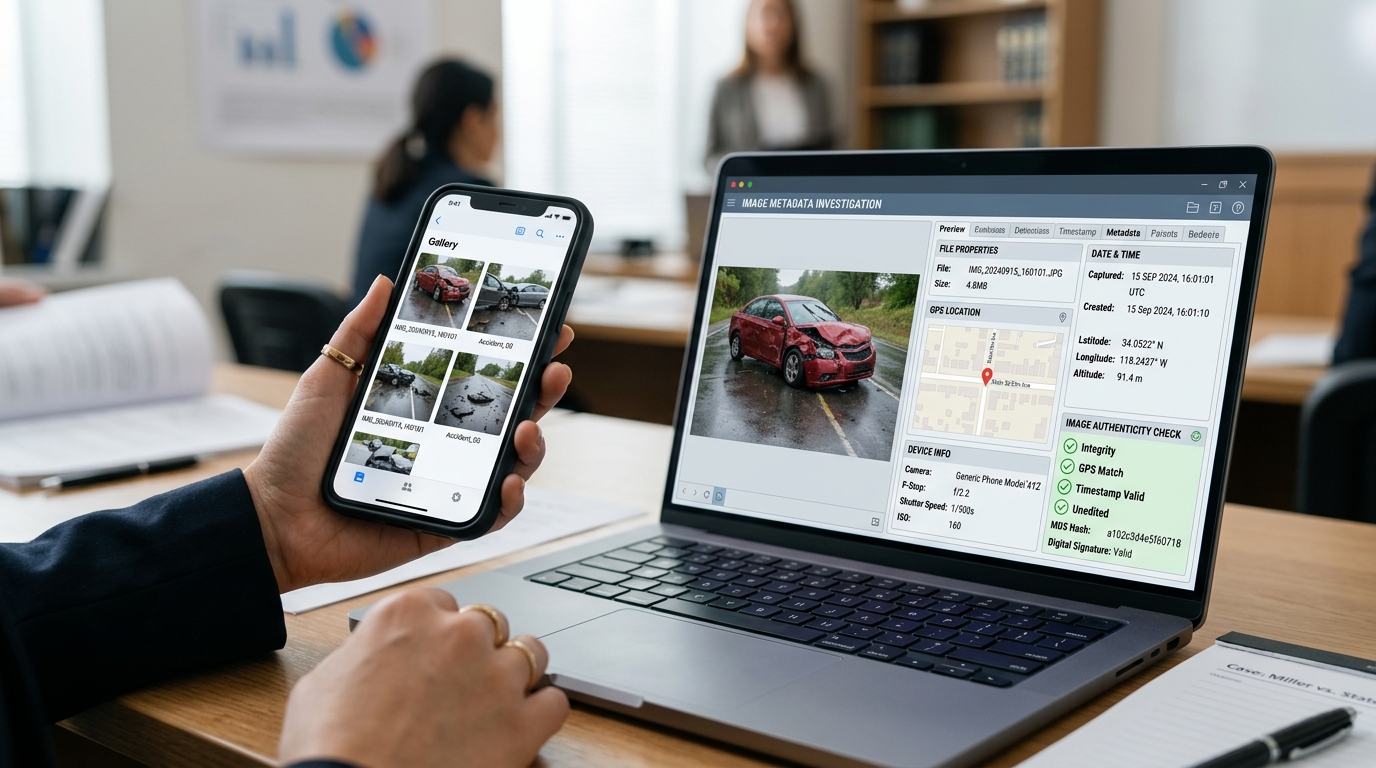
Injury claims often start with photos. A person takes pictures of a crash scene, a broken stair, a wet floor, a damaged bike, bruising, swelling, property damage, or road conditions. Those images can help prove what happened. Problems begin when someone edits the file in a way that changes the facts.
Basic edits, such as cropping or improving brightness, may not create a major issue if the person keeps the original file. Fact-changing edits create bigger risk. Removing shadows, changing colors, adding objects, deleting hazards, or enhancing damage can make the evidence unreliable. A claimant who submits altered evidence may lose credibility even if the underlying injury is real.
Original files matter more than screenshots #
Original files usually provide more useful information than screenshots. A phone photo may contain metadata, creation time, device details, and location data. A screenshot often removes or weakens that information. If a claim depends on a photo or video, keep the original file and avoid sending only compressed copies through messaging apps.
Preserve accident photos in more than one safe location. Save the original image, avoid unnecessary edits, and record where and when the photo came from. If an attorney or insurance company asks for evidence, explain whether the file came from a phone, dashcam, security camera, police record, or another source.
Metadata can help confirm the timeline #
Metadata can support authenticity when it matches the rest of the claim. It may show when a photo was created, what device captured it, and where the file came from. Metadata does not solve every dispute, but it can help confirm that a photo fits the accident timeline.
Insurance companies may question files that have missing metadata, strange timestamps, heavy editing history, or no clear source. That does not always mean the evidence is fake. Some apps strip metadata automatically. However, missing details can create extra questions, so injured people should preserve original files whenever possible.
Deepfakes and synthetic media can damage claim credibility #
Deepfake videos and synthetic audio create a different risk. These files can make someone appear to say or do something that never happened. In injury claims, fake or manipulated media could target fault, injury severity, activity levels, settlement discussions, or witness statements.
For example, a fake video might show a claimant lifting heavy objects after reporting a back injury. A manipulated audio clip might suggest a driver admitted fault when they did not. A fake screenshot might show a settlement promise or damaging statement. Even if the fake eventually gets exposed, it can waste time, increase costs, and confuse negotiations.
Insurance disputes may focus on digital trust #
Insurance companies already review evidence carefully. In 2026, they may look more closely at file history, image quality, timestamps, social media content, app records, and possible manipulation. That review can help detect fraud, but it can also delay legitimate claims when normal files raise questions.
Claimants should not fight technology with shortcuts. The better approach is transparency. Keep original records, organize the timeline, save medical documents, preserve communication, and avoid editing evidence. A clean evidence file makes it harder for an insurer to create unnecessary doubt.
How Injured People Can Protect Evidence in 2026 #
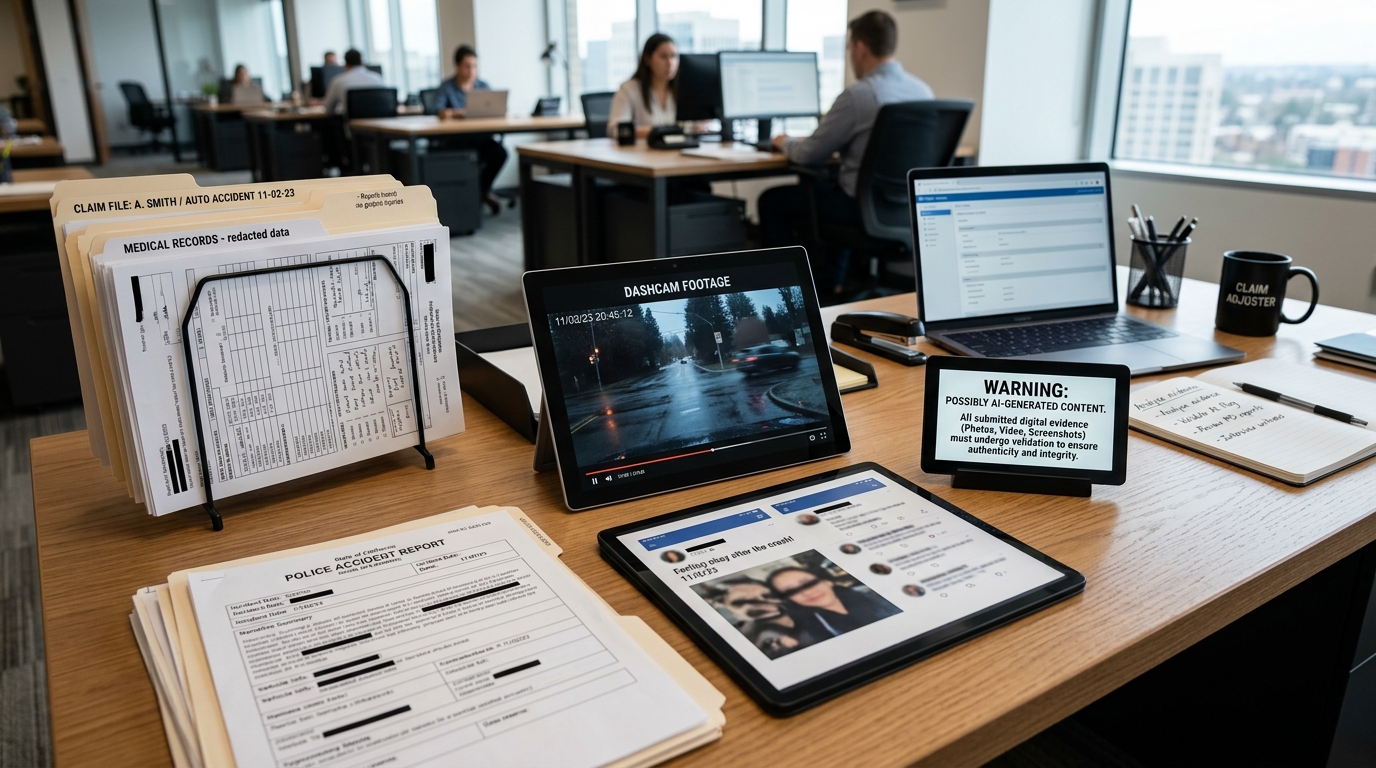
Evidence protection starts immediately after an accident. Take clear photos and videos if you can do so safely. Capture wide shots, close-ups, lighting conditions, traffic signs, floor hazards, vehicle positions, weather, visible injuries, and property damage. Do not stage the scene. Do not move items just to create a better picture.
After documenting the scene, save the original files. Avoid filters, beauty tools, AI cleanup, object removal, background changes, or automatic enhancement that changes facts. If a file needs cropping or brightness adjustment for viewing, keep the original version and label the edited copy clearly.
Build a clean digital evidence timeline #
A strong injury claim tells a consistent story. The accident report, photos, medical records, witness statements, repair estimates, work records, and digital files should line up. When the timeline looks organized, insurers have fewer opportunities to attack credibility.
Start with the accident date and build forward. Save emergency room records, doctor visits, imaging reports, prescriptions, physical therapy notes, bills, wage loss records, and communication with insurers. Add photos and videos in the order you captured them. Keep notes about where each file came from.
This topic connects with Injury Law Wiki’s article on social media evidence in personal injury claims. Online posts, photos, comments, tags, and screenshots can support or hurt a case depending on context and authenticity.
Wearable records can also become part of the timeline. Injury Law Wiki’s guide on wearable data in personal injury claims explains how smartwatches, GPS apps, fitness trackers, and health apps can show activity changes before and after an injury.
AI claim review adds another layer. Injury Law Wiki’s article on AI injury claims in 2026 explains how automated insurance systems may review records, flag inconsistencies, and influence settlement evaluations.
Do not generate or recreate accident evidence #
Never use AI to recreate an accident scene and present it as real evidence. A visual reconstruction may help explain a theory, but it must carry a clear label as an illustration. Passing off generated images, fake screenshots, edited videos, or synthetic audio as real proof can destroy credibility and create serious legal problems.
If you need to explain what happened, use honest descriptions, diagrams, expert analysis, and properly labeled demonstrative exhibits. Courts and insurers care about the difference between evidence and illustration. Mixing those categories creates avoidable risk.
Official evidence rules also focus on authentication. Federal Rule of Evidence 901 explains that a party must produce enough evidence to support a finding that an item is what the party claims it is. Readers can review the rule here: Federal Rule of Evidence 901.
AI-generated evidence in injury claims will keep growing as editing tools become easier to use. That trend does not make every claim weaker. It makes careful documentation more valuable. Injured people who preserve original files, avoid misleading edits, and keep consistent records can protect their credibility.
The safest rule is simple: document honestly, preserve originals, label edits, and never create fake proof. A personal injury claim should rely on real records, real treatment, real timelines, and real damages. AI can help organize information, but it should never replace authentic evidence.
This article is for general educational purposes only and is not legal advice. Evidence rules, insurance procedures, privacy rights, discovery duties, and claim deadlines vary by location and case facts. Speak with a licensed attorney about a specific personal injury claim.