
Delivery riders can face overlapping questions about road safety, platform work and personal injury. The vehicle label alone does not establish employment status or insurance coverage.
This guide focuses on the choices readers can verify, the mistakes that create unnecessary risk, and the records or instructions worth checking before they act. Details differ by person, location and equipment or legal setting. Use current primary sources for anything that could change after publication.
Understanding delivery e-scooter injury claims before making a decision #
A delivery e-scooter crash can happen while a rider is traveling to collect an order, transporting food or returning from a delivery. The phase of a trip may affect which records exist and what coverage questions arise, but that does not establish a universal legal result. Laws for scooters, bicycle-like devices and motor vehicles differ by state and locality; identify the actual equipment first.
Scooter cases can involve physical and digital evidence that move on different schedules. The rider’s clothing, helmet and scooter can be preserved physically, while app details may change after a delivery is closed. A simple evidence inventory can note when each file was created and who holds the original. That record helps a legal professional ask targeted questions without treating every digital screenshot as conclusive.
Identify the facts and limits first #
The rider’s working arrangement matters. A person may be an employee, independent contractor or someone using a platform occasionally. Those labels can influence workers’ compensation or other benefits, yet legal classification depends on applicable law and actual circumstances. Do not assume a signed contract settles every coverage question.
If a vehicle strikes a rider, preserve basic collision information: location, date, intersection controls, vehicle registration details and witness contact information when safe. Photos of roadway conditions may show bike-lane markings, debris or blocked sight lines. Record what the rider experienced personally rather than inventing a narrative to fit a legal claim.
Preserve crash scene photos and witness information #
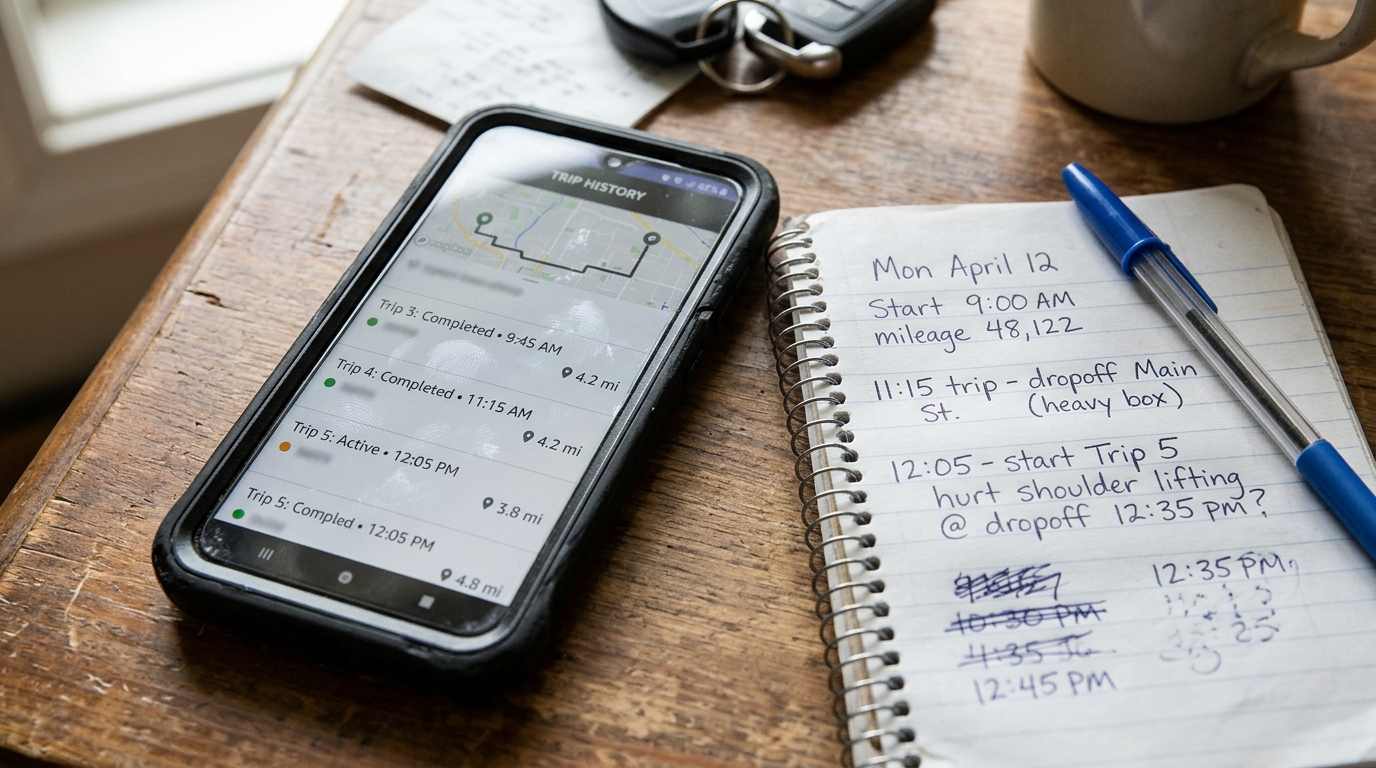
App activity records may indicate that a delivery was accepted or in progress. Screenshots can be helpful, but a screenshot may omit context or later corrections. Preserve original messages, trip logs, receipts and support correspondence where lawful. Do not share another person’s private account information or attempt unauthorized access to platform systems.
Municipal road design may affect the incident without creating automatic agency liability. A missing lane marking, damaged pavement or obstructed view should be photographed safely, along with the nearest intersection and direction of travel. Determining whether a public entity had a legal duty may involve notice rules and technical analysis. Riders should not assume every defect will support a successful government claim.
Save delivery app activity and earnings records #
Medical evaluation should take priority when there is head impact, worsening pain, weakness, confusion or other concerning symptoms. Helmets help reduce some risks but cannot prevent every injury. Keep follow-up visits, treatment plans and work restrictions documented accurately. A missed work shift is a practical loss, but its economic value should be calculated from actual records.
A scooter’s condition may also matter. Brakes, tires, lights, battery placement and steering components can affect control. Photograph the device before repairs when feasible, and avoid operating a visibly damaged scooter. A maintenance problem does not automatically prove manufacturer responsibility; expert examination may be necessary.
Recognize where assumptions break down #
Insurance can involve the rider’s personal policies, a third-party vehicle policy, platform coverage or other sources. Exclusions often depend on device type and whether commercial use occurred. Ask the insurer for the relevant policy language and a written coverage explanation. A generic advertisement promising delivery protection is not proof that a particular event is covered.
The identity of the responsible party may be disputed. Drivers, property managers, maintenance contractors or product manufacturers might be investigated depending on the facts. Fault requires evidence of duty, breach, causation and harm under applicable law. Being injured while working does not guarantee that another person was negligent.
Platform work also changes the income conversation. A rider may work irregular shifts, accept orders from several apps or earn different amounts during busy periods. Reconstruct a realistic earnings history rather than relying on a best-ever day. Expenses such as equipment maintenance and transportation can matter to lost-profit calculations, depending on applicable law and proof.
Practical steps for delivery e-scooter injury claims #
Evidence becomes more fragile when video systems overwrite footage or platform accounts update. Record nearby businesses that may have cameras, preserve original files and consult qualified counsel about lawful preservation requests. Do not trespass or pressure witnesses into particular statements. A trustworthy record separates facts from assumptions.
Lost income can be difficult for app workers whose earnings vary. Save several months of payout statements, hours worked and related expenses where available. Gross receipts are not identical to take-home profit. A careful calculation uses verifiable records and does not speculate about unlimited future orders.
Evaluate evidence and next steps #

Local scooter rules may include speed limits, sidewalk restrictions, helmet requirements for some users and parking provisions. Those rules change across jurisdictions. Look up current municipal and state regulations rather than copying a rule from another city. The fact that a scooter was available for purchase does not establish that it was used legally in every location.
Medical follow-up should be consistent with the injury and clinician recommendations. A rider may be tempted to return immediately because missing a shift affects income, but riding while dizzy or unable to operate brakes safely creates additional risk. Keep written restrictions and follow them. Legal documentation should support recovery, not pressure the patient to exaggerate or ignore symptoms.
Request actual insurance and employment documents #
Settlement discussions should account for medical progress, insurance limits, disputed liability and possible future care when properly supported. A quick payment may involve a release. Read documents fully and seek professional advice before signing something that affects rights. There is no universal payout formula for delivery riders.
Seek jurisdiction-specific legal advice promptly #
The strongest delivery e-scooter injury claims begin with safe medical care and a reliable timeline. Identify the device, rider work status, app activity, location, potential insurers and available witnesses. That fact-based approach helps a professional assess the case without relying on myths about gig work or scooter technology.
Because many delivery riders are young or new to gig work, explain agreements in ordinary language. What counts as work time? Which platform handled the order? Was the scooter owned, rented or shared? Who insured the involved vehicle? Clear answers to these questions often matter more than a dramatic headline about delivery accidents in general.
Practical checklist:
- Prioritize emergency care after serious symptoms
- Preserve crash scene photos and witness information
- Record scooter make, condition and serial details
- Save delivery app activity and earnings records
- Request actual insurance and employment documents
- Seek jurisdiction-specific legal advice promptly
Common questions
Does app delivery automatically provide workers compensation? No. Eligibility depends on actual worker classification and local law.
Does an app trip log prove another driver was negligent? No. It may help establish timing, while fault requires independent evidence.
Are all e-scooters regulated alike? No. Device specifications and city or state rules matter.
Should a damaged scooter be ridden home? Not if safety components are compromised. Arrange safe transport instead.
For related context, see the injurylaw.wiki guide. For authoritative reference, review this primary resource and additional official or technical guidance. Verify updates, dates and jurisdiction before applying general guidance to a specific situation.
Use this guide as a starting framework rather than a promise of a particular outcome. For delivery e-scooter injury claims, the most useful next move is to verify the applicable details, preserve accurate information and make a decision based on the real conditions in front of you. When specialist advice, official instructions or a qualified inspection is appropriate, seek that input before a decision becomes difficult to reverse.