Medical lien delays in personal injury settlements can surprise injured people after a case finally resolves. Many claimants expect the settlement check to arrive soon after signing the release. Then they learn that Medicare, Medicaid, a private health plan, a hospital, a medical provider, or another benefit program may claim repayment from the settlement. That process can slow the final payout and reduce the amount the injured person receives.
A medical lien or reimbursement claim usually means someone paid for accident-related treatment and wants repayment from the settlement. The word “lien” can sound intimidating, but the basic idea is simple. If an insurance plan or medical provider covered bills connected to the injury claim, that party may argue that settlement money should reimburse those costs before the injured person receives the remaining funds.
These issues matter more in 2026 because medical billing, health insurance coordination, government benefit recovery, and settlement documentation can all take time. A case may settle in principle, but the final check may still depend on lien review, payoff letters, negotiations, reductions, disputed charges, and written confirmation.
This guide explains why medical lien delays in personal injury settlements happen, which claims may affect settlement checks, and how injured people can prepare for reimbursement issues before the case closes.
Why Medical Lien Delays in Personal Injury Settlements Happen #
A personal injury settlement usually does not move straight from agreement to payment. Several steps happen before the injured person receives funds. The insurance company may need a signed release. The attorney may need to deposit and clear the settlement check. Then the legal team must review fees, case costs, medical balances, and lien claims before disbursing money.
Medical reimbursement can slow this process because lien holders often need time to confirm what they paid, which bills relate to the accident, and how much they will accept as final repayment. Some claims involve government agencies. Others involve private health plans or medical providers. Each one may follow a different process.
Common medical liens and reimbursement claims #
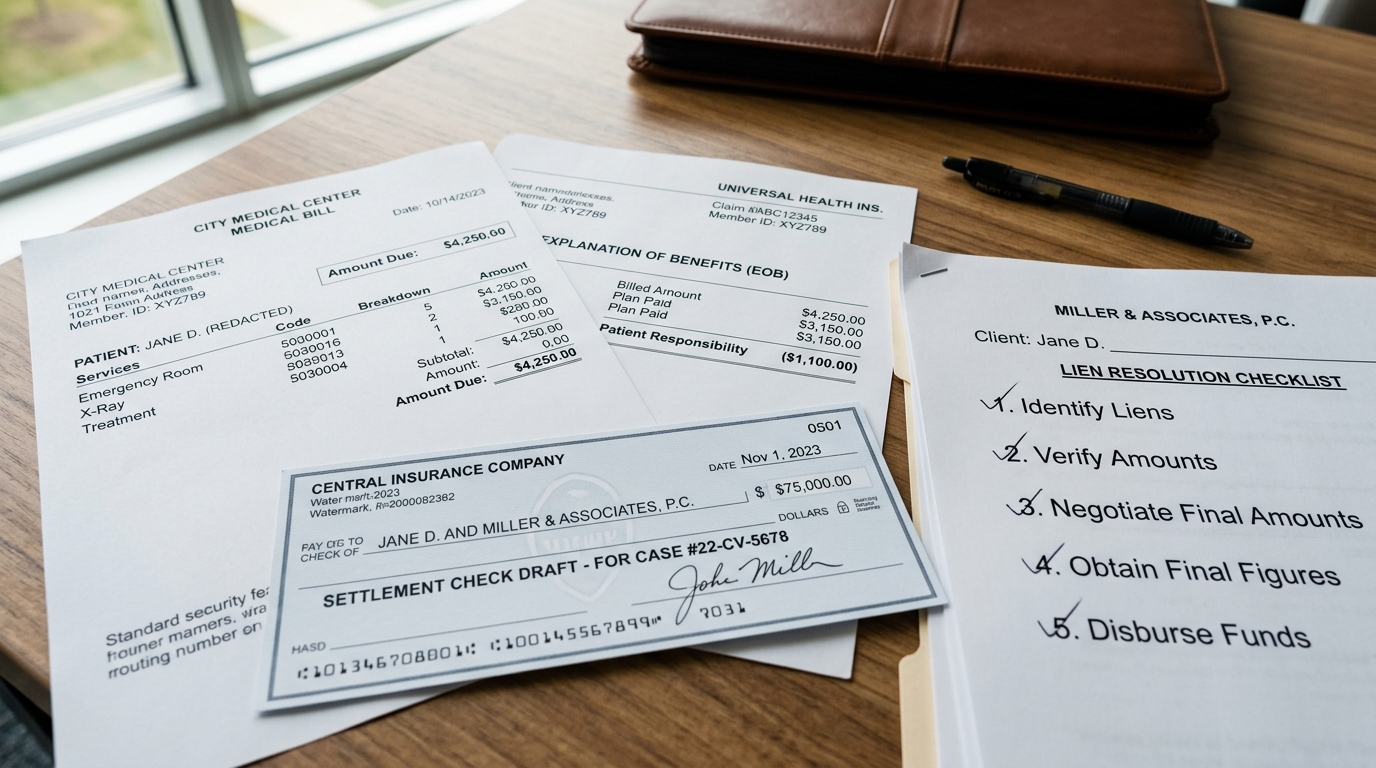
Several types of claims can affect a settlement. Medicare may seek repayment for conditional payments connected to the injury. Medicaid may pursue reimbursement when a third party caused the need for medical care. Private health insurers may claim reimbursement rights under plan documents. Hospitals and doctors may assert provider liens if they treated the injured person under a lien agreement. Workers’ compensation carriers may also seek repayment in some injury cases involving job-related accidents and third-party claims.
The exact rules depend on the payer, the state, the insurance plan, and the facts of the injury claim. That is why injured people should not assume every medical bill disappears after settlement. A settlement can resolve the injury claim against the at-fault party while still leaving reimbursement issues to handle before final disbursement.
Medicare and Medicaid claims need careful review #
Government benefit claims often require careful handling. Medicare may make conditional payments when another party should ultimately pay for accident-related care. After settlement, Medicare may seek repayment from the recovery. Medicaid programs also use third-party liability rules to recover injury-related medical costs when another legally responsible party exists.
These claims can delay settlement payouts because the final amount may not appear immediately. The legal team may need to report the case, review payment summaries, dispute unrelated charges, request reductions, and wait for a final demand or confirmation. A rushed payout can create problems if the lien later remains unpaid.
Private health plans may claim reimbursement rights #
Private health insurance plans may also seek reimbursement. Some plans include subrogation or reimbursement language that allows the plan to recover medical expenses from a personal injury settlement. Employer-sponsored plans may follow federal rules, while other plans may depend more heavily on state law.
These claims require document review. The plan may demand repayment, but the injured person or attorney may need to verify whether the plan has valid recovery rights, whether the charges relate to the accident, and whether a reduction applies. This process can take time, especially when the insurer provides incomplete records or includes unrelated treatment.
Why the settlement check may not arrive right away #
Many injured people ask one practical question after settlement: “When will I get paid?” The answer depends on the release, insurer processing, check clearance, lien resolution, medical bill review, and final accounting. A settlement can feel finished emotionally while the financial paperwork continues behind the scenes.
Medical lien delays can happen for several reasons. A hospital may take weeks to update a balance. A health plan may request more claim information. Medicare or Medicaid may need time to issue a final payoff. A provider may include treatment that does not relate to the accident. A private plan may refuse to reduce its claim until negotiations continue.
Final payoff letters can control timing #
A final payoff letter gives the legal team a clearer amount to pay. Without it, the attorney may need to hold funds in trust to protect the injured person and avoid unpaid lien problems. That can frustrate clients, but it often protects them from future collection efforts.
The issue becomes more serious when several lien holders exist. One case may involve emergency care, surgery, physical therapy, imaging, Medicare payments, private insurance payments, and provider balances. Each claim needs review before the final settlement statement becomes accurate.
How Injured People Can Prepare for Medical Lien Issues #

The best way to reduce delays is to identify lien issues early. Injured people should tell their attorney about every health plan, government benefit, medical provider, hospital bill, and unpaid balance connected to the accident. Missing information can slow the case later because the legal team may discover reimbursement claims near settlement.
Good records help. Keep insurance cards, medical bills, explanation of benefits forms, provider statements, Medicare or Medicaid notices, collection letters, and settlement-related correspondence. Share updates when a new bill arrives. A lien problem becomes easier to manage when the paperwork stays organized from the beginning.
Steps that may reduce settlement delays #
Start lien review before settlement discussions finish. Ask medical providers for updated balances. Review health insurance payment summaries. Check whether bills relate to the accident or to unrelated treatment. Confirm whether providers billed health insurance or treated under a lien agreement. Track every medical facility, ambulance provider, imaging center, therapist, specialist, and pharmacy involved in care.
This topic connects with Injury Law Wiki’s guide on car accident injury claims because medical bills, treatment records, and settlement evidence often shape the value and timing of the case. It also connects with what personal injury law is, since timing, documentation, and legal deadlines can affect nearly every part of an injury claim.
Digital evidence can also matter. Injury Law Wiki’s article on wearable data in personal injury claims explains how health apps, GPS, and fitness data may affect injury evidence. Medical lien review focuses on bills and reimbursement, but both topics depend on accurate records and consistent timelines.
Insurance technology may also affect claims. Injury Law Wiki’s article on AI injury claims in 2026 explains how automated reviews may influence settlements. Lien resolution still needs human review because billing errors, unrelated charges, and reimbursement rights require careful judgment.
Negotiation may reduce the amount owed #
A lien amount is not always the final amount. Attorneys may review the charges, dispute unrelated treatment, request reductions, and negotiate with providers or insurers. Some lien holders may reduce their claims to account for attorney fees, case costs, limited insurance funds, disputed liability, or hardship. Results vary, and no one should assume a reduction will always happen.
For an official federal resource, readers can review the Centers for Medicare & Medicaid Services page on Medicare’s recovery process here: CMS Medicare Recovery Process.
Medical lien delays in personal injury settlements can feel frustrating, but they often serve an important purpose. They help confirm who must be repaid, how much should be paid, and what amount the injured person can safely receive. A settlement check that arrives too quickly without resolving valid claims can create future collection problems.
The smarter approach is to prepare early. Track every medical bill. Report every health plan. Save every reimbursement notice. Ask questions before signing the settlement release. Review the final settlement statement carefully. A clean lien resolution process can protect the injured person from unpaid balances and make the final payout more reliable.
This article is for general educational purposes only and is not legal advice. Medical lien rules, Medicare recovery, Medicaid reimbursement, private health plan rights, provider liens, settlement procedures, and legal deadlines vary by location and case facts. Speak with a licensed attorney about a specific personal injury settlement.