
Wearable data in personal injury claims is becoming more important in 2026 because many people now wear devices that quietly record daily activity. Smartwatches, fitness trackers, GPS apps, sleep monitors, heart-rate sensors, and health apps may collect details about movement, rest, location, workouts, stress, and recovery. After an accident, that information can become part of the evidence picture.
For injured people, wearable data can help or hurt. It may show that daily steps dropped after a crash. It may support claims of poor sleep, reduced activity, limited mobility, or slower recovery. However, the same data may also create problems if it appears inconsistent with medical records, testimony, or claimed limitations.
This guide explains how wearable data in personal injury claims may work, what evidence victims should preserve, and why digital records need context before anyone treats them as the full truth.
Why Wearable Data in Personal Injury Claims Matters in 2026 #
Personal injury claims depend on proof. Medical records, photos, witness statements, incident reports, bills, wage records, and expert opinions still matter. However, digital evidence now adds another layer. A smartwatch may record activity before and after an accident. A fitness tracker may show sleep disruption. A phone app may show location data. A health app may store symptoms or heart-rate trends.
That information can feel objective because a device recorded it. Still, wearable data is not perfect. Devices can misread movement, miss activity, lose battery power, sync late, or depend on user settings. A step count may not show pain. A heart-rate spike may not explain why it happened. A sleep score may not tell the full story of trauma, medication, anxiety, or discomfort.
Courts generally require evidence to be authenticated before it carries weight. Federal Rule of Evidence 901 explains that the party using evidence must produce support showing that the item is what the party claims it is. Readers can review Cornell Law School’s page on Federal Rule of Evidence 901 for general background.
Wearables can show changes before and after an injury #
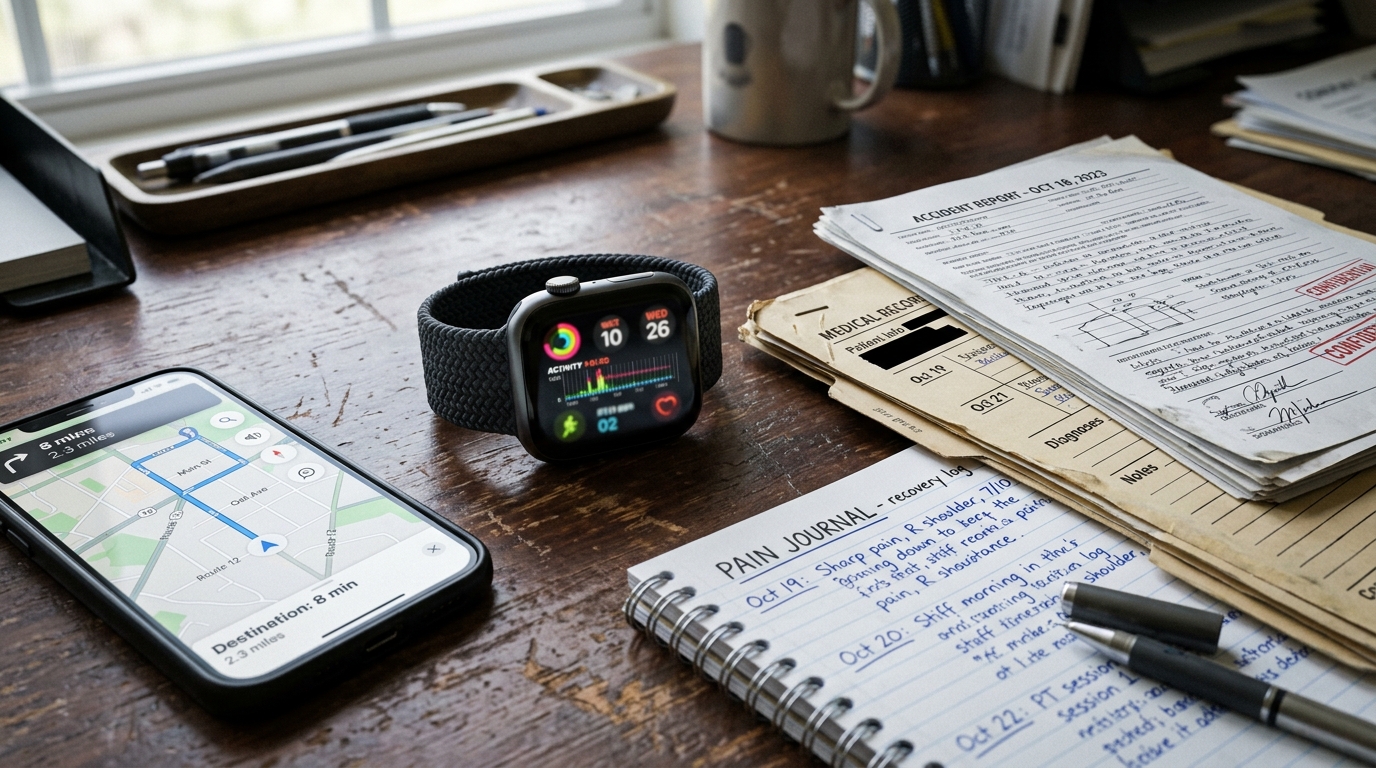
A major benefit of wearable data is comparison. If a person regularly wore a device before the accident, the data may show a normal activity pattern. After the injury, the same device may show fewer steps, shorter walks, less exercise, more rest, or disrupted sleep.
That type of comparison can help explain damages. For example, a runner who stops running after a crash may have data showing the change. A warehouse worker with a back injury may show reduced daily movement. A person with chronic pain may show sleep changes after the accident.
This evidence can support medical records, not replace them. Injury Law Wiki’s article on AI injury claims in 2026 explains why strong records matter when insurers use automated tools to review claims.
Step counts need context #
Step data can help, but it can also mislead. A person may take many steps and still feel serious pain. Another person may appear inactive because the device was not worn. A low step count may reflect battery loss, device settings, hospital time, or a change in routine.
Because of that, step counts should connect to medical notes, pain journals, job duties, treatment plans, and real-life limitations. The goal is not to show one perfect number. The goal is to show a consistent pattern that supports the injury story.
Sleep data can support pain and recovery claims #
Sleep problems are common after injuries. Pain, stress, medication, anxiety, concussion symptoms, and limited movement can all affect rest. A wearable may show short sleep, frequent waking, restlessness, or changes in sleep timing.
Even so, sleep data needs explanation. A device cannot always tell whether pain, stress, a newborn, work schedule, or another condition caused the disruption. A stronger claim connects sleep data with medical visits, medication records, therapy notes, and symptom tracking.
Wearable data can also hurt an injury claim #
The same records that support a claim can also give the defense something to challenge. An insurer may argue that activity levels look too high for the claimed injury. A defense lawyer may focus on workout data, travel patterns, or GPS movement. A single active day may appear more important than weeks of pain if no one explains the context.
This is why injured people should not casually hand over unlimited app access. A broad request may capture years of private information that has little to do with the injury. It may include unrelated workouts, sleep habits, location history, reproductive health data, or other sensitive details.
Digital evidence can also overlap with technology-based accident claims. For example, a crash involving driver-assistance systems may require vehicle logs and app records. Injury Law Wiki’s guide on driver assistance crash claims in 2026 explains why modern crash evidence often includes system data.
High activity does not always mean full recovery #
Defense teams may oversimplify wearable records. They may argue that steps, workouts, or location history prove the injured person recovered. That argument may ignore pain afterward, limited duration, medication use, modified activity, or pressure to keep working despite symptoms.
A person can be active and still injured. Many people push through pain because they need income, childcare, school attendance, or basic daily tasks. Wearable data should be read with medical evidence and personal context.
How Injured People Can Protect Wearable Evidence #
People with injury claims should treat wearable data carefully. Do not delete records, reset devices, or edit app history without legal guidance. At the same time, do not give broad access to every account without understanding the request. The best approach is preservation with boundaries.
Start by saving screenshots or exports of relevant data. Include dates before the accident, the accident date, and the recovery period. Preserve step counts, sleep reports, workout logs, GPS routes, heart-rate trends, fall detection alerts, emergency SOS records, and app notes if they relate to the injury. Also save device model information, app names, update history, and account settings when possible.
Medical care still comes first. Wearable records may support the claim, but they cannot diagnose injuries by themselves. A victim still needs provider notes, imaging, treatment plans, bills, work restrictions, prescriptions, and follow-up care.
Wearable data should match the medical timeline #

A strong claim connects digital records to the medical timeline. If the accident happened on Monday, the evidence should show what changed afterward. Did sleep drop? Daily movement decline? Did workouts stop? Heart-rate patterns change during pain episodes? GPS data show fewer trips outside the home?
The timeline should also explain gaps. A missing week of data may reflect hospitalization, device damage, charging issues, app problems, or simply not wearing the device. Without explanation, an insurer may try to use missing data against the injured person.
Wearable evidence can also matter in e-bike, e-scooter, and pedestrian-related claims. GPS movement, speed estimates, or activity logs may help reconstruct where the person was before impact. Injury Law Wiki’s guide on e-bike and e-scooter injury claims in 2026 connects well with this issue.
Privacy limits should be clear #
Insurance companies may ask for health app records, fitness tracker data, phone location history, or smartwatch exports. Some requests may be reasonable. Others may be too broad. Injured people should understand what dates, data types, and devices the request covers.
A narrow request may focus on activity data for a limited recovery period. A broad request may seek unrelated private information. Before sharing anything, victims should consider relevance, privacy, and whether the request goes beyond the claim.
Wearable records may also matter in robotaxi or automated vehicle claims. A passenger’s smartwatch could show heart-rate spikes, fall alerts, location data, or movement changes after a sudden stop. Injury Law Wiki’s article on robotaxi accident injury claims in 2026 supports this wider digital-evidence cluster.
Basic personal injury principles still apply. The injured person must connect fault, harm, medical treatment, and damages. Wearable data may help explain the harm, but it does not replace the legal foundation. Readers can review what personal injury law is and types of personal injury cases explained for broader context.
In serious cases, experts may need to explain the data. A medical expert may discuss whether reduced activity matches the injury. A digital evidence expert may explain how the device records information. A vocational expert may connect reduced movement or pain to work limits. Without explanation, numbers on a screen can be misunderstood.
Wearable data in personal injury claims will likely become more common as devices become more advanced. Future claims may involve glucose monitors, heart rhythm alerts, crash detection, sleep tracking, gait analysis, oxygen levels, and more detailed movement records. That growth can help injured people prove real harm. However, it can also give insurers more data to challenge.
The bottom line is simple: wearable data is a tool, not a verdict. It can support a claim when it matches medical records and real-life limitations. It can hurt a claim when it appears inconsistent or lacks context. Injured people should preserve relevant records, avoid broad data sharing, document symptoms, and keep medical treatment organized.
General information only. This article is for educational purposes and is not legal advice. Evidence rules, privacy rights, insurance procedures, and personal injury deadlines vary by location and case facts. Speak with a licensed attorney about a specific injury claim before sharing private wearable, health app, or GPS data.