- What Is Personal Injury Law
- Understanding Negligence in Personal Injury Law
- Common Types of Personal Injury Cases
- What Compensation Can Injury Victims Receive
- The Personal Injury Claim Process
- How Long Do You Have to File a Claim
- Do You Need a Personal Injury Lawyer
- Why Understanding Personal Injury Law Matters
What Is Personal Injury Law #
Personal injury law is a legal area that allows an injured person to seek financial compensation when harm is caused by another party’s negligence, recklessness, or intentional conduct. The purpose of personal injury law is to make the injured party financially whole after suffering physical, emotional, or economic losses.
This area of law applies to many situations, including vehicle accidents, workplace injuries, medical malpractice, unsafe property conditions, and defective products. If another person or organization caused your injury, personal injury law provides a legal path to recovery.
Understanding Negligence in Personal Injury Law #
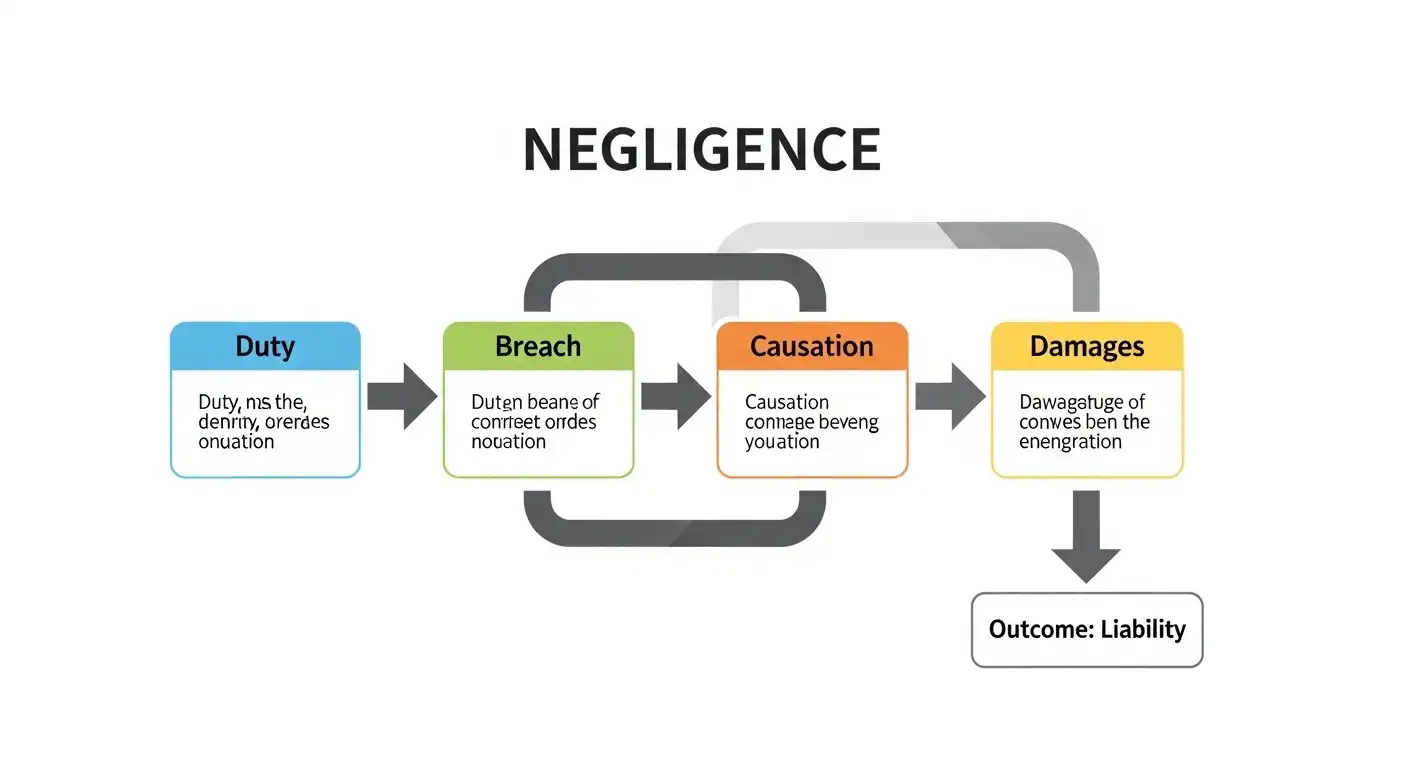
Negligence is the foundation of most personal injury claims. To succeed in a case, the injured party must prove that another party failed to act with reasonable care under the circumstances.
Elements of Negligence #
Duty of Care #
The responsible party must have owed a legal duty to act safely. For example, drivers have a duty to obey traffic laws and property owners must keep their premises reasonably safe.
Breach of Duty #
A breach occurs when someone fails to meet their duty of care, such as speeding, ignoring safety procedures, or failing to repair hazardous conditions.
Causation #
The breach of duty must directly cause the injury. This means the injury would not have occurred without the negligent action.
Damages #
The injured person must have suffered actual losses, such as medical bills, lost income, or pain and suffering.
Common Types of Personal Injury Cases #
Personal injury law covers a wide range of injury scenarios. Some of the most common personal injury case types include:
- Car accident injuries
- Workplace injuries
- Medical malpractice claims
- Slip and fall accidents
- Product liability cases
Each case type has unique legal requirements, but all rely on proving negligence or liability.

What Compensation Can Injury Victims Receive #
Compensation in personal injury law is intended to cover both financial and personal losses resulting from the injury.
Economic Damages #
Economic damages are measurable financial losses and may include medical expenses, future treatment costs, lost wages, and reduced earning capacity.
Non Economic Damages #
Non economic damages compensate for pain and suffering, emotional distress, and reduced quality of life caused by the injury.
The Personal Injury Claim Process #
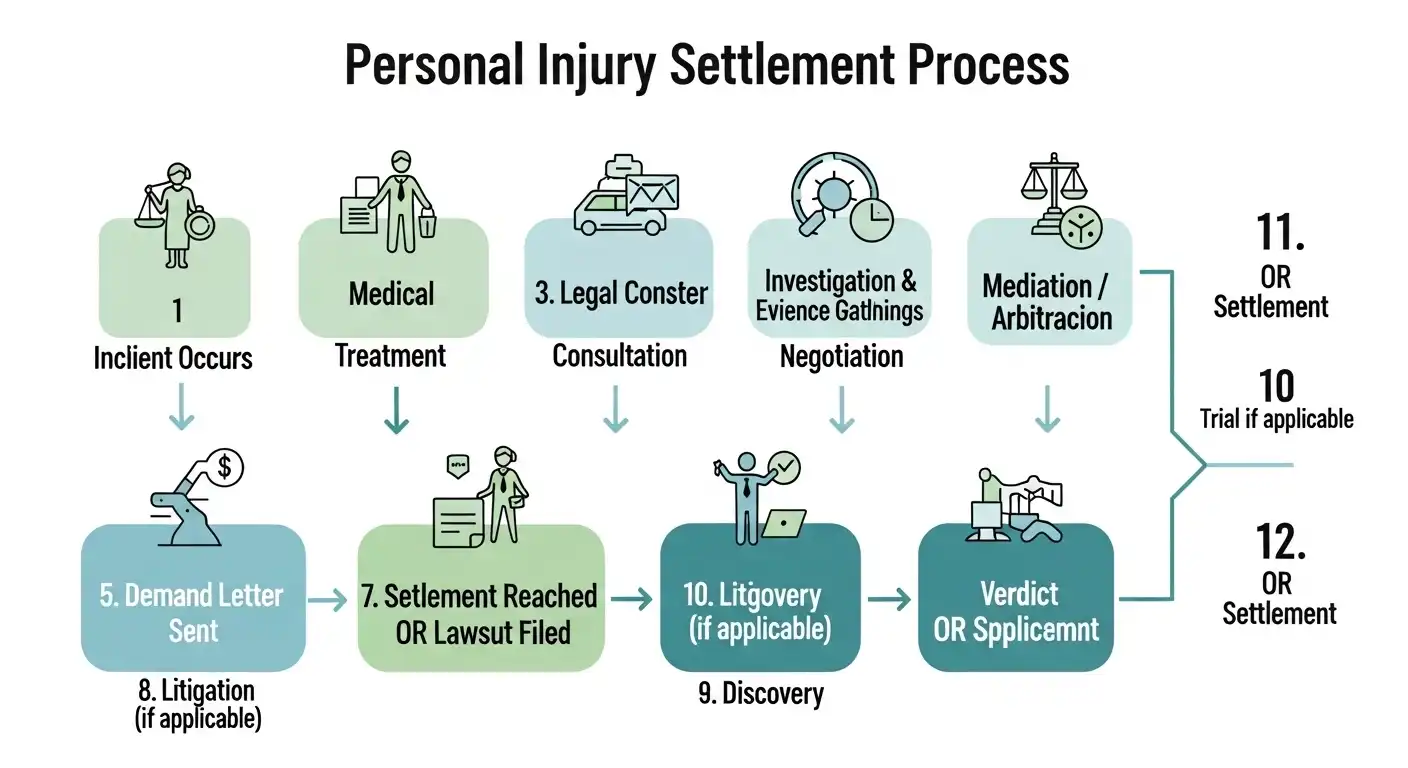
The personal injury claim process typically begins after medical treatment and evidence collection. Most cases are resolved through insurance negotiations, but some require litigation.
Steps in a Personal Injury Claim #
- Seek medical treatment
- Document the accident and injuries
- File an insurance claim
- Negotiate a settlement
- File a lawsuit if necessary
How Long Do You Have to File a Claim #
Every state enforces a statute of limitations that limits the amount of time an injured person has to file a lawsuit. Missing this deadline can permanently eliminate the right to compensation.
Learn more in our guide on personal injury statute of limitations.
Do You Need a Personal Injury Lawyer #
While minor injuries may be resolved without legal assistance, serious injuries often require an experienced personal injury lawyer. Attorneys handle evidence, negotiations, deadlines, and court procedures while working to maximize compensation.
According to the American Bar Association, injury victims represented by legal counsel typically recover higher settlements.
Why Understanding Personal Injury Law Matters #
Understanding personal injury law helps injury victims protect their rights, avoid insurance pitfalls, and pursue fair compensation. Whether you are researching legal options or preparing to file a claim, knowing the fundamentals is a critical first step.