AI injury claims are becoming a serious topic in 2026 because insurance companies now use more automated tools to review accident files, medical records, repair photos, fraud indicators, and settlement values. These tools can help insurers work faster, but speed does not always mean fairness. For injured victims, the real question is whether the claim receives a full human review or gets pushed through a system that misses important details.
Personal injury claims are not simple data files. A crash, fall, workplace injury, defective product, or medical error can affect a person’s body, income, sleep, mental health, family routine, and future plans. Software may read dates, bills, diagnosis codes, and claim notes, but it may not fully understand pain, fear, delayed symptoms, or why treatment gaps happened.
That is why AI injury claims need strong evidence. If an insurance system scores a claim too low, the injured person must be ready to show what the data did not capture. Medical records, witness statements, accident photos, wage records, treatment timelines, and provider notes can help explain the real impact of the injury.
Injury Law Wiki already explains the foundation of claims in What Is Personal Injury Law? and Types of Personal Injury Cases Explained. This guide focuses on how automated insurance reviews may affect the settlement process and what injured people should document before accepting an offer.
Why AI Injury Claims Are Becoming More Common #
Insurance companies handle large claim volumes. To manage those files, many carriers use software to organize documents, identify patterns, estimate repair costs, detect possible fraud, review photos, and compare claims with past cases. Artificial intelligence can assist with that work by scanning large amounts of information quickly.
The National Association of Insurance Commissioners explains that AI is used in insurance for underwriting, pricing, customer service, claims handling, marketing, and fraud detection. NAIC also notes that AI can help estimate repair costs or assess damage using photos and historical data. Readers can review the official page here: NAIC Artificial Intelligence insurance topic page.
How AI can influence the claim file #
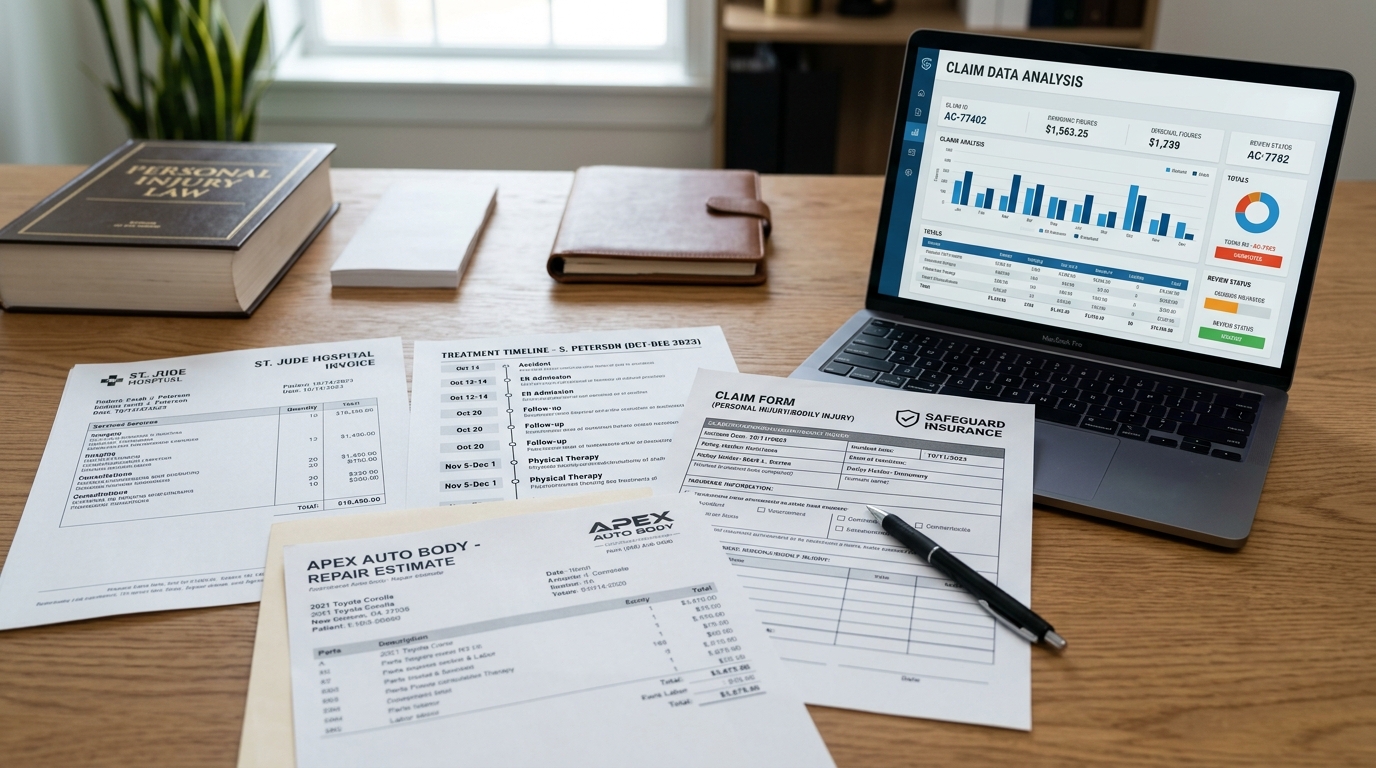
AI may not decide every claim by itself, but it can influence how the file moves. A system may flag a claim as routine, suspicious, high-value, low-value, or incomplete. It may compare medical treatment with similar claims. It may identify gaps between appointments. It may estimate vehicle damage from photos. It may summarize medical records for an adjuster.
Those functions can be useful when they improve organization. The risk appears when a tool reduces a complicated injury to a narrow pattern. For example, a person may delay treatment because they lacked transportation, waited for insurance approval, could not miss work, or believed the pain would improve. A system may only see a gap and treat the claim as weaker.
Quick offers can be risky #
A fast settlement offer can feel helpful when medical bills and lost wages start to build. However, a quick offer may arrive before the injured person understands the full injury timeline. Symptoms can worsen after the first few days. Follow-up care, imaging, therapy, specialist visits, and work restrictions can change the value of a claim.
Before accepting an early offer, review whether it covers emergency care, future treatment, lost income, pain, reduced mobility, emotional distress, medication costs, and long-term limitations. Once a settlement release is signed, reopening the claim can become very difficult.
Why context can get lost in automated reviews #
Insurance software works best when the facts are clean and consistent. Injury claims are rarely that simple. Two people can experience the same accident and recover differently. One person may heal in weeks. Another may need months of treatment because of age, prior injuries, job duties, or the force of impact.
This is especially important in car accident cases. Injury Law Wiki’s guide on Car Accident Injury Claims Explained notes that vehicle accident claims often involve insurance and liability disputes. Automated reviews may add another layer to that dispute because the insurer may rely on internal scoring that the injured person never sees.
Treatment gaps need clear explanations #
Insurance companies often use treatment gaps to reduce claim value. Automated tools may make that issue even more important because gaps are easy to identify in records. The system may not know why the gap happened unless the records explain it.
If you missed appointments, document the reason. Keep messages to providers, referral delays, transportation problems, work conflicts, insurance denials, pharmacy records, and follow-up requests. Clear explanations help prevent a real-life obstacle from becoming an unfair claim weakness.
How Injured Victims Can Protect Their Claim #
The best response to AI injury claims is not fear. It is preparation. Injured people should build a file that explains the accident, the injury, the treatment, and the financial impact in a way that a human adjuster, attorney, mediator, or court can understand.
Start with the basics. Save accident photos, police reports, incident reports, witness names, medical records, bills, prescriptions, repair estimates, wage loss proof, and insurance letters. If the injury involved technology, save digital evidence too. That may include dashcam video, app records, wearable data, vehicle alerts, emails, text messages, or portal communications.
Evidence should tell the full story #
Good evidence connects the injury to daily life. Medical records show treatment, but they may not show every struggle. A pain journal can explain sleep problems, missed family responsibilities, difficulty driving, reduced movement, headaches, anxiety, or limits at work. Wage records can show lost income. Photos can show visible injuries, damaged property, or dangerous conditions.
If the injury involves advanced technology, Injury Law Wiki’s post on Driver Assistance Crash Claims in 2026 is a helpful internal resource. Both topics show the same trend: modern injury claims often depend on human choices and digital evidence.
Ask whether a human reviewed the claim #

If an offer seems low, unclear, or unusually fast, ask questions. Did a human adjuster review the file? What records did the insurer consider? Did they review all medical bills and provider notes? Did they include future treatment? Did they explain why certain damages were excluded?
You may not receive every internal detail, but asking specific questions can reveal whether the insurer overlooked evidence. It also creates a record that you challenged the offer with facts rather than emotion.
Protect privacy when sharing records #
Insurance companies may ask for medical authorizations, recorded statements, app data, or broad records. Be careful. A request may look routine but allow access to information that goes beyond the injury claim. Share what is necessary, but avoid giving unlimited access without understanding the scope.
This matters even more as insurers use more data-driven tools. The more information a company collects, the more it may analyze. If you are unsure what a request covers, review it carefully before signing. A claim should include relevant evidence, not every private detail of your life.
AI injury claims will likely become more common as insurers continue using automation to manage files and evaluate losses. The technology may improve speed and organization, but injured people should not assume that a fast review equals a fair review.
The strongest claim still depends on proof. Get medical care, follow treatment instructions, organize your records, explain treatment gaps, track symptoms, and challenge low offers with details. Insurance software may influence the first number, but strong evidence can still change the conversation.
This article is for general educational purposes only and is not legal advice. Anyone dealing with a serious injury, disputed liability, delayed treatment, or a low settlement offer should speak with a qualified attorney about deadlines, evidence, insurance strategy, and legal options.