
Medical Malpractice Law Explained #
Medical malpractice law governs legal claims filed by patients who are injured due to negligent medical care. When healthcare providers fail to meet accepted standards of care and cause harm, injured patients may seek compensation through a medical malpractice claim.
Medical malpractice cases are complex and often involve detailed medical records, expert testimony, and strict legal requirements.
What Is Medical Malpractice #
Medical malpractice occurs when a healthcare professional provides treatment that falls below the accepted medical standard and causes injury to a patient.
Not every poor medical outcome qualifies as malpractice. The injury must result directly from negligence rather than an unavoidable complication.
Elements of a Medical Malpractice Claim #
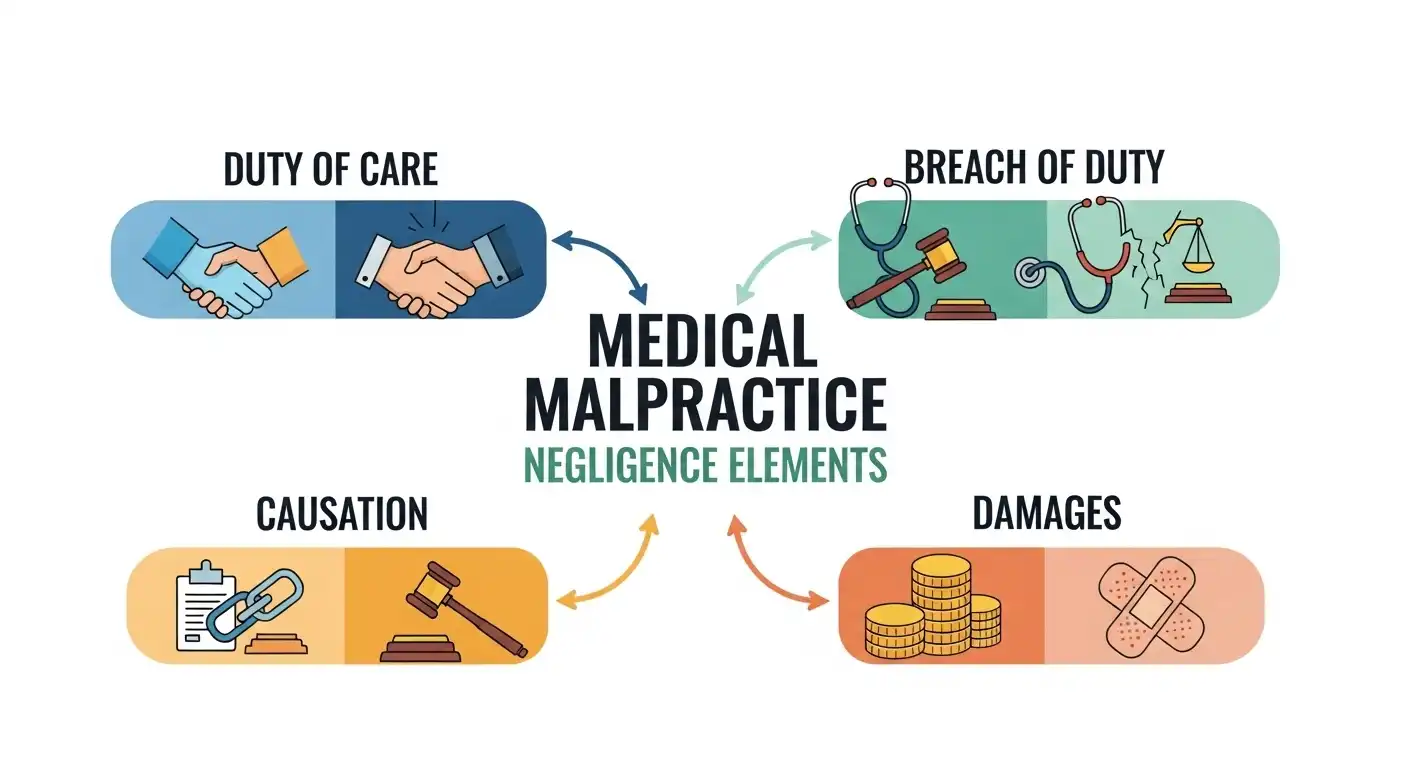
To succeed in a medical malpractice case, an injured patient must prove several legal elements.
Duty of Care #
A doctor-patient relationship must exist, establishing a duty to provide competent medical care.
Breach of the Medical Standard of Care #
The provider must have failed to act in accordance with accepted medical practices under similar circumstances.
Causation #
The breach must be the direct cause of the patient’s injury or worsened condition.
Damages #
The patient must have suffered measurable harm, such as additional medical expenses, disability, or loss of income.
Common Types of Medical Malpractice Cases #
Medical malpractice law applies to many types of healthcare errors and omissions.
Misdiagnosis and Delayed Diagnosis #
Failure to correctly diagnose a condition can lead to delayed treatment and serious complications.
Surgical Errors #
Surgical malpractice includes operating on the wrong site, leaving surgical instruments inside the body, or performing unnecessary procedures.
Medication Errors #
Medication errors involve incorrect dosages, improper prescriptions, or dangerous drug interactions.
Birth Injuries #
Medical negligence during pregnancy or delivery can result in long-term injuries to the child or mother.

Who Can Be Held Liable for Medical Malpractice #
Medical malpractice claims may involve individual providers or healthcare institutions.
- Doctors and surgeons
- Nurses and medical staff
- Hospitals and clinics
- Medical laboratories
- Pharmaceutical providers
What Compensation Is Available in Medical Malpractice Cases #
Medical malpractice law allows injured patients to seek compensation for economic and non-economic losses.
Economic Damages #
Economic damages include medical expenses, future treatment costs, lost income, and rehabilitation expenses.
Non Economic Damages #
Non economic damages compensate for pain and suffering, emotional distress, and loss of quality of life.
Some states impose caps on non economic damages in malpractice cases.
The Medical Malpractice Claim Process #
Medical malpractice claims follow a formal legal process that may involve pre-suit requirements and expert reviews.
Steps in a Medical Malpractice Claim #
- Obtain medical records
- Consult medical experts
- File a malpractice claim
- Negotiate a settlement
- Proceed to trial if necessary

Time Limits for Filing a Medical Malpractice Claim #
Medical malpractice cases are subject to specific statutes of limitations, which may differ from other personal injury claims.
Learn more in our guide on personal injury statute of limitations.
When to Consult a Medical Malpractice Lawyer #
Medical malpractice cases are legally and medically complex. Consulting an experienced medical malpractice lawyer can help injured patients navigate the legal process and pursue fair compensation.
According to the American Bar Association, malpractice claims often require expert legal and medical analysis.
Why Medical Malpractice Law Matters #
Understanding medical malpractice law empowers patients to hold negligent providers accountable and improve healthcare safety. Knowing your legal rights is essential when medical treatment causes preventable harm.
